


 Generate QR code
 Open Access
 Subscription Access
Digital socio-cultural environment as an ecosystem of demographic choice
https://doi.org/10.35854/2219-6242-2025-3-376-385
Abstract
The article argues that the rapid spread of digital communications is transforming the space of demographic decision-making by young people, shifting it from traditional social institutions to media platforms, influencers and algorithms of the digital environment. The article aimed to conceptualize the «digital socio-cultural environment» in demography as a multi-layered ecosystem and to describe its internal architecture. The author analyzed secondary empirical data demonstrating the influence of various media systems on the marital, reproductive, and migration attitudes of Russian youth. Methodologically, the work is based on a review of international and Russian literature, aimed not only to summarize the known data, but also to construct or clarify a theoretical model. The empirical data were used, namely secondary analysis of arrays of sociological centers in Russia and other countries, the results of sociological research by Russian scientists. The study resulted in the development of a five-level ecosystem model (infrastructure, platform, discursive-content, interaction, normative) based on a literature review. Operational definitions of the concepts of «media-mediated socialization», «digital socio-cultural environment,» and «ecosystem of demographic choice» are proposed as new categories of demographic analysis. The work demonstrated that digital ecosystem formats have shifted the median of the desired age of first marriage by four years in recent years. At the same time, the share of those for whom one child is the ideal family has decreased from 10 % to 3 % over the past ten years. The conclusions emphasize the need to take into account the ecosystem dimension when developing demographic policy, as well as the potential of digital platforms as channels for targeted rulemaking.
About the Author
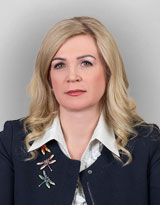
E. V. Gomozova
Institute for Demographic Research of the Federal Center of Theoretical and Applied Sociology of the Russian Academy of Sciences
Russian Federation
Russian Federation
Evgeniya V. Gomozova – postgraduate student
6 Fotievoy St., bldg. 1, Moscow 119333
References
1. Spitsyna A. VCIOM: More than half of young people prefer online communication to face-to-face. Rossiiskaya Gazeta. Jun. 24, 2025. URL: https://rg.ru/2025/06/24/vciom-bolee-poloviny-molodyh-liudej-predpochitaiut-onlajn-obshchenie-zhivomu.html (accessed on 03.08.2025). (In Russ.).
2. Digital 2025: The Russian Federation. Datareportal. Mar. 03, 2025. URL: https://datareportal.com/reports/digital-2025-russian-federation (accessed on 03.08.2025).
3. Loginov D.M. Youth demographic orientations formed during the institutional instability of the 2010s. Mir Rossii. Sotsiologiya. Etnologiya = Universe of Russia. Sociology. Ethnology. 2025;34(3):28-50. (In Russ.). DOI: 10.17323/1811-038X-2025-34-3-28-50
4. Grishaeva S.A. Social transformations within the conditions of digital environment. Vestnik Moskovskogo universiteta. Seriya 18. Sotsiologiya i politologiya = Moscow State University Bulletin. Series 18. Sociology and Political Science. 2020;26(1):70-81. (In Russ.). DOI: 10.24290/1029-3736-2020-26-1-70-81
5. Soldatova G.U., Voiskounsky A.E. Socio-cognitive concept of digital socialization: A new ecosystem and social evolution of the mind. Psikhologiya. Zhurnal Vysshei shkoly ekonomiki = Psychology. Journal of the Higher School of Economics. 2021;18(3):431-450. (In Russ.). DOI: 10.17323/1813-8918-2021-3-431-450
6. Zubok Yu.A., Chuprov V.I. Youth in the cultural space: Self-regulation of life activity. Moscow: Norma; 2022. 304 p. (In Russ.).
7. Belova E.N., Sinkovskaya I.G., Lukina A.K., Kvitkovskaya S.I. Future envisaged by young population as predictor of demographic behavior: Interdisciplinary approach. Vestnik Kemerovskogo gosudarstvennogo universiteta. Seriya: Gumanitarnye i obshchestvennye nauki = Bulletin of Kemerovo State University. Series: Humanities and Social Sciences. 2024;8(4):479-488. (In Russ.). DOI: 10.21603/2542-1840-2024-8-4-479-488
8. Alburez-Gutierrez D., Aref S., Gil Clavel S., et al. Demography in the digital era: New data sources for population research. In: Arbia G., Peluso S., Pini A., et al., eds. Book of short papers SIS2019. Torino: Pearson Italia; 2019:23-30. DOI: 10.31235/osf.io/24jp7
9. Cesare N., Lee H., McCormick T., et al. Promises and pitfalls of using digital traces for demographic research. Demography. 2018;55(5):1979-1999. DOI: 10.1007/s13524-018-0715-2
10. Smak T. Living on the net, or media consumption of modern youth. VCIOM. Jun. 24, 2025. URL: https://wciom.ru/analytical-reviews/analiticheskii-obzor/zhivushchie-v-setiili-mediapotreblenie-sovremennoi-molodezhi (accessed on 03.08.2025). (In Russ.).
11. Childfree — and should we fight them? VCIOM. Oct. 21, 2024. URL: https://wciom.ru/analytical-reviews/analiticheskii-obzor/chaildfri-i-nuzhno-li-s-nimi-borotsja (accessed on 02.08.2025). (In Russ.).
12. On the protection of children from information harmful to their health and development. Federal law of December 29, 2010 No. 436-FZ. Konsul’tantPlyus. URL: https://www.consultant.ru/document/cons_doc_LAW_108808/ (accessed on 02.08.2025). (In Russ.).
13. How many children does it take to be happy? VCIOM. May 30, 2024. URL: https://wciom.ru/analytical-reviews/analiticheskii-obzor/skolko-detei-nuzhno-dlja-schastja (accessed on 03.08.2025). (In Russ.).
14. I don’t want to study, I want to get married, or about the age of marriage. VCIOM. Aug. 28, 2017. URL: https://wciom.ru/analytical-reviews/analiticheskii-obzor/ne-khochuuchitsya-khochu-zhenitsya-ili-o-vozraste-vstupleniya-v-brak (accessed on 03.08.2025). (In Russ.).
15. Attitudes towards marriage and divorce: Monitoring. VCIOM. Jul. 08, 2019. URL: https://wciom.ru/analytical-reviews/analiticheskii-obzor/otnoshenie-k-brakam-i-razvodam-monitoring (accessed on 01.08.2025). (In Russ.).
16. Reproductive attitudes. Public Opinion Foundation. Aug. 08, 2024. URL: https://fom.ru/Rabota-i-dom/15055 (accessed on 01.08.2025). (In Russ.).
17. Kuchmaeva O.V., Zolotareva O.A. Conceptual foundations of the Russian model of family policy. In: Rostovskaya T.K., ed. Proc. 3rd All-Russ. demographic forum with int. particip. (Moscow, December 03-04, 2021). Moscow: Federal Research Sociological Center of the Russian Academy of Sciences; 2021:58-61. (In Russ.). DOI: 10.19181/forum.978-5-89697-373-7.2021.12
18. Osadchaya G.I., Volkova O.A., Yudina T.N., Roslavtseva M.V. Family values and roles of migrant women from Central Asia. Zhenshchina v rossiiskom obshchestve = Woman in Russian Society. 2024;(4):84-100. (In Russ.). DOI: 10.21064/WinRS.2024.4.6
19. Vinogradova E. Careerists by birth. RBC. Nov. 25, 2023. URL: https://www.rbc.ru/newspaper/2023/11/27/6560a7829a79470b8c7a613c (accessed on 03.08.2025). (In Russ.).
Review
For citations:
Gomozova E.V. Digital socio-cultural environment as an ecosystem of demographic choice. Sociology and Law. 2025;17(3):376-385. (In Russ.) https://doi.org/10.35854/2219-6242-2025-3-376-385
Views:
168
JATS XML



 Email this article